Chargement...

Valeriana officinalis
12-25€ / 10ml
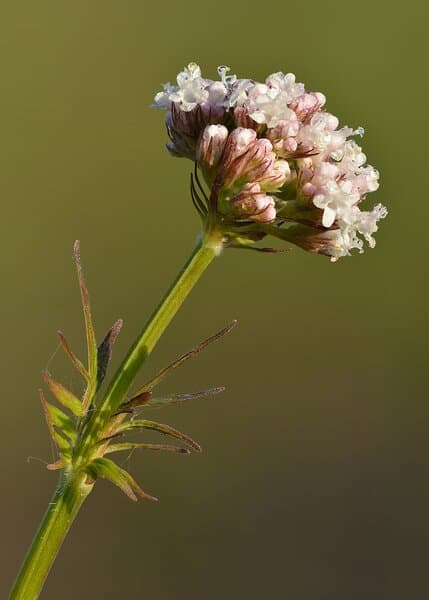
Valerian is the secret weapon against insomnia -- but you have to accept its, let's say, particular scent. Hippocrates and Galen were already prescribing it over 2000 years ago to calm the nerves. Its name comes from the Latin 'valere' (to be in good health). In the Middle Ages, it was nicknamed 'herb of cats' because felines go crazy for it -- an effect comparable to catnip. During both World Wars, valerian was distributed to civilians to combat anxiety from bombings. Today, it is one of the most studied herbal sedatives in the world, with over 200 clinical studies on sleep.
Valerian essential oil contains isovaleric acid, responsible for its 'worn socks' smell -- let's be honest. But despite this off-putting scent, it is a sedative of exceptional power, superior to lavender and petitgrain for severe insomnia. Valeranone and bornyl acetate act on GABA receptors in the brain, exactly like benzodiazepines, but without the side effects. It is often used on the pillow -- the smell fades -- or in synergy with more pleasant essential oils.
Les propriétés listées reposent sur des études in vitro et/ou un usage traditionnel. Sauf mention contraire, elles n'ont pas été validées par des essais cliniques humains rigoureux. Ces informations ne constituent pas un avis médical.
Sedative
Clinical studies (PubMed)
Calming
Confirmed traditional use
Antispasmodic
Traditional use
Relaxing
In vitro studies
Valerian is mainly used in the evening, in diluted topical application or olfaction. Its strong smell makes it unsuitable for diffusion. The trick: combine it with pleasant-smelling essential oils (lavender, mandarin, sweet orange) that mask its scent while reinforcing its sedative action. Do not use during the day -- drowsiness guaranteed. Do not combine with sedative or anxiolytic medications (potentiation of effects).
Non recommandé en diffusion. Privilégier l'application cutanée diluée ou l'inhalation contrôlée.
Diluer dans une huile végétale avant application. Respecter les dosages recommandés selon la zone et le public.
Non recommandé par voie orale. Utiliser exclusivement par voie cutanée ou en diffusion.
Les huiles essentielles suivantes se combinent particuli\u00e8rement bien avec valériane pour renforcer ou compl\u00e9ter ses effets :
Very much so. Valerenic acid and valeranone are powerful nervous system sedatives. Used for severe insomnia, deep anxiety and nervous agitation. 1-2 drops on the soles of the feet or on the pillow before bed. Warning: very strong, musky scent.
Same plant (Valeriana officinalis) but different preparations. The essential oil contains volatile compounds (valeranone, isovaleric acid). Supplements contain valerenic acids. Both are sedative but through partially different mechanisms.
Isovaleric acid gives it a very intense, somewhat unpleasant musky, cheesy smell. This scent limits its use in diffusion. The soles of the feet are the preferred application route (bypasses the olfactory discomfort). Cats are attracted to the smell.
The information on OilsGuide.com is for informational purposes only and does not replace medical advice. Essential oils are active substances that may present risks. Consult a healthcare professional before any therapeutic use.