Chargement...

Thymus serpyllum
10-20€ / 10ml
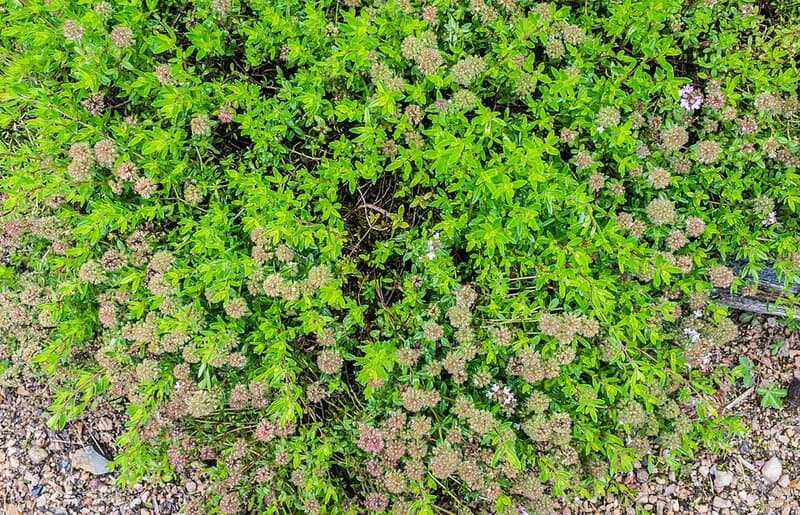
Wild thyme (Thymus serpyllum) is the wild thyme of European meadows. It grows close to the ground (hence 'serpyllum', which crawls). Found throughout Europe, from alpine meadows to Atlantic heathlands. Shepherds traditionally used it to treat sheep -- hence its popular Provencal nickname 'piloun'.
Wild thyme has a VARIABLE chemotype depending on origin and altitude. It can be rich in thymol (like thymol thyme), linalool (like linalool thyme) or carvacrol (like oregano). It is therefore ESSENTIAL to check the analysis report before use -- precautions depend on the chemotype.
Les propriétés listées reposent sur des études in vitro et/ou un usage traditionnel. Sauf mention contraire, elles n'ont pas été validées par des essais cliniques humains rigoureux. Ces informations ne constituent pas un avis médical.
Antiseptic
Traditional use
Expectorant
Traditional use
General tonic
Traditional use
Wild thyme is used according to its chemotype. A wild thyme rich in thymol will have the same properties and contraindications as thymol thyme. A wild thyme rich in linalool will be gentle like linalool thyme. ALWAYS check the analysis report.
Adapté à la diffusion atmosphérique. 3-5 gouttes, 15-20 min maximum par heure. Ne pas diffuser en continu.
Diluer dans une huile végétale avant application. Respecter les dosages recommandés selon la zone et le public.
Non recommandé par voie orale. Utiliser exclusivement par voie cutanée ou en diffusion.
Les huiles essentielles suivantes se combinent particuli\u00e8rement bien avec serpolet pour renforcer ou compl\u00e9ter ses effets :
Yes, it is wild thyme (Thymus serpyllum), also called creeping thyme. It grows wild in dry European meadows. Its profile varies by terroir -- it may contain thymol, carvacrol OR linalool. Always check the chemotype on the bottle.
Depending on the chemotype, yes. If it is rich in thymol or carvacrol, it is a strong anti-infectious agent (same precautions as thymol thyme). If rich in linalool, it is gentler and similar to linalool thyme. The chemotype determines everything.
If it is a linalool chemotype, yes, pleasant and well tolerated. If it is thymol or carvacrol, no -- phenols irritate the mucous membranes when diffused. Always check the chemotype before use.
The information on OilsGuide.com is for informational purposes only and does not replace medical advice. Essential oils are active substances that may present risks. Consult a healthcare professional before any therapeutic use.