Chargement...

Myrtus communis ct. acétate de myrtényle
8-18€ / 10ml
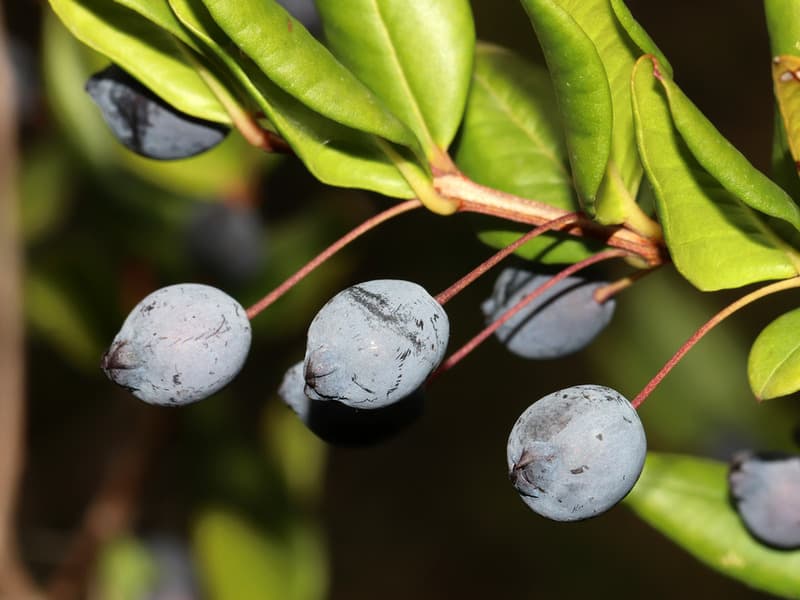
Myrtle is an aromatic shrub of the Mediterranean basin, sacred to the ancient Greeks. Aphrodite, goddess of love, wore a crown of myrtle. Romans used it to perfume banquets. Myrtle grows in Corsica, Sardinia, Tunisia and Morocco. There are two chemotypes: red myrtle (rich in myrtinyl acetate) and green myrtle (rich in 1,8-cineole). Red myrtle is the most widespread in French-language aromatherapy.
Red myrtle is a gentle, well-tolerated and versatile essential oil for the respiratory sphere. Unlike eucalyptus (powerful but irritating), red myrtle is suitable for children and sensitive individuals. It is the gentle expectorant par excellence. Its myrtinyl acetate also gives it a venous decongestant action (heavy legs, hemorrhoids).
Les propriétés listées reposent sur des études in vitro et/ou un usage traditionnel. Sauf mention contraire, elles n'ont pas été validées par des essais cliniques humains rigoureux. Ces informations ne constituent pas un avis médical.
Expectorant
Traditional use
Venous decongestant
Traditional use
Red myrtle is the gentle alternative to eucalyptus for children and sensitive individuals. In chest massage diluted to 5%, it helps clear the bronchi gently. For venous problems, it combines with cypress and mastic in leg massage. It is a safe and pleasant family essential oil.
Adapté à la diffusion atmosphérique. 3-5 gouttes, 15-20 min maximum par heure. Ne pas diffuser en continu.
Diluer dans une huile végétale avant application. Respecter les dosages recommandés selon la zone et le public.
Non recommandé par voie orale. Utiliser exclusivement par voie cutanée ou en diffusion.
Les huiles essentielles suivantes se combinent particuli\u00e8rement bien avec myrte rouge pour renforcer ou compl\u00e9ter ses effets :
Red myrtle is a specialized antitussive, particularly for dry coughs and nighttime coughs. Myrtenyl acetate calms the cough reflex without suppressing useful expectoration. 2-3 drops diluted on the chest before bed.
Red myrtle (Morocco) is richer in myrtenyl acetate and more antitussive. Green myrtle (Corsica) is richer in 1,8-cineole and more expectorant. For dry cough, prefer red. For productive cough, prefer green.
In general yes, from age 6 diluted. It is one of the gentlest antitussive essential oils. For younger children (3-6 years), reduce the dose and always dilute well. Avoid in asthmatic children.
The information on OilsGuide.com is for informational purposes only and does not replace medical advice. Essential oils are active substances that may present risks. Consult a healthcare professional before any therapeutic use.