Chargement...

Hypericum perforatum
15-35€ / 10ml
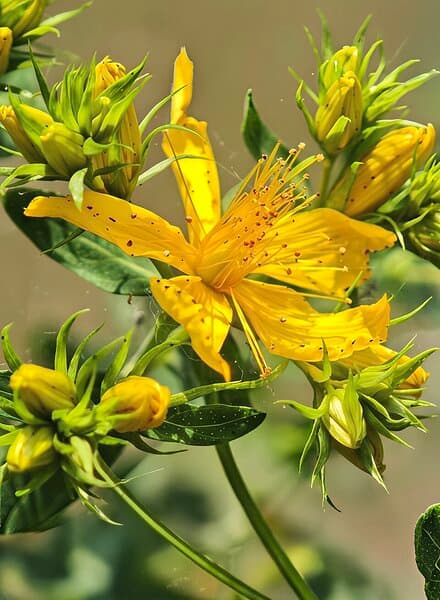
St. John's wort, 'the herb of St. John', is one of the most famous and most controversial medicinal plants in Europe. Since Antiquity, this solar plant with golden yellow flowers has been associated with light and protection against 'dark spirits'. Dioscorides recommended it for burns, and Paracelsus prescribed it for melancholy. The essential oil requires maximum vigilance due to its extreme photosensitivity and numerous drug interactions.
St. John's wort essential oil differs fundamentally from St. John's wort macerate (red oil) and dry extract capsules. The essential oil mainly contains terpenes (alpha-pinene, caryophyllene) but very little hypericin -- the compound responsible for the documented antidepressant action. It would therefore be MISLEADING to claim the essential oil is 'antidepressant' like the standardized plant extract. However, its photosensitivity and drug interactions remain PRESENT in the essential oil.
Les propriétés listées reposent sur des études in vitro et/ou un usage traditionnel. Sauf mention contraire, elles n'ont pas été validées par des essais cliniques humains rigoureux. Ces informations ne constituent pas un avis médical.
Healing
Confirmed traditional use
Antidepressant
Clinical studies (plant, not EO alone)
Anti-inflammatory
Traditional use
Analgesic
Traditional use
MAXIMUM CAUTION: St. John's wort essential oil is VERY photosensitizing. NEVER apply on an area that will be exposed to sun within 72 hours. Preferential winter use or on systematically covered areas. IMPERATIVELY CHECK the absence of interactions with any current medication (contraceptive pill, antidepressants, anticoagulants, antiretrovirals, etc.). Always consult a health professional before use.
Adapté à la diffusion atmosphérique. 3-5 gouttes, 15-20 min maximum par heure. Ne pas diffuser en continu.
Diluer dans une huile végétale (5-10%). ATTENTION : ne pas s'exposer au soleil dans les 8h suivant l'application.
Non recommandé par voie orale. Utiliser exclusivement par voie cutanée ou en diffusion.
Les huiles essentielles suivantes se combinent particuli\u00e8rement bien avec millepertuis pour renforcer ou compl\u00e9ter ses effets :
No. The essential oil (steam distillation) is rare and different from the famous red macerated oil (solar infusion in carrier oil). The macerated oil is more commonly used for burns and nerve pain. The essential oil is richer in specific sesquiterpenes.
The plant (in oral supplements) is known to interact with many drugs (contraceptives, antidepressants, anticoagulants). The essential oil in topical use is less problematic, but caution is still warranted. Consult a healthcare professional.
Yes, hypericin is photosensitizing. No sun exposure after skin application. The macerated oil and essential oil both carry this risk. Apply in the evening only.
The information on OilsGuide.com is for informational purposes only and does not replace medical advice. Essential oils are active substances that may present risks. Consult a healthcare professional before any therapeutic use.