Chargement...

Hyssopus officinalis
12-25€ / 10ml
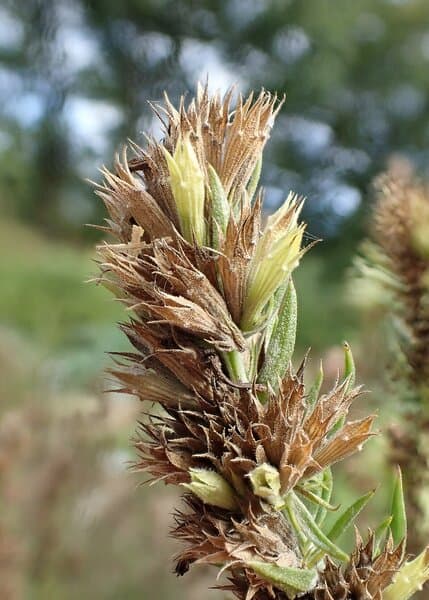
Hyssop is one of the oldest plants in the Mediterranean pharmacopoeia. Its name comes from the Hebrew 'ezob', sacred herb of the purification rituals of the Temple of Jerusalem. The Bible mentions it: 'Purify me with hyssop and I shall be pure.' Hippocrates prescribed it for lung ailments. Benedictine monks cultivated it and integrated it into Chartreuse liqueur. But pinocamphone, its main compound, is a powerful neurotoxin -- hence its strict regulation in France.
Hyssop stands out for remarkable expectorant power, but also for a danger that sets it apart. Its ketones (pinocamphone) can cause convulsions even in people without epilepsy history. Do NOT confuse with hyssop decumbens (var. decumbens), rich in 1,8-cineole and free of ketones, which offers comparable properties in complete safety.
Les propriétés listées reposent sur des études in vitro et/ou un usage traditionnel. Sauf mention contraire, elles n'ont pas été validées par des essais cliniques humains rigoureux. Ces informations ne constituent pas un avis médical.
Expectorant
European pharmacopoeia
Mucolytic
Scientific aromatherapy
Antiviral
In vitro studies (herpes)
Let's be frank: domestic use of hyssop officinalis is strongly discouraged. For respiratory problems, eucalyptus radiata, ravintsara or hyssop decumbens offer the same benefits without the risks. If prescribed by an aromatherapist, never exceed 2 drops per dose, 3 doses/day, 5 days max.
Non recommandé en diffusion. Privilégier l'application cutanée diluée ou l'inhalation contrôlée.
Diluer dans une huile végétale avant application. Respecter les dosages recommandés selon la zone et le public.
Non recommandé par voie orale. Utiliser exclusivement par voie cutanée ou en diffusion.
Les huiles essentielles suivantes se combinent particuli\u00e8rement bien avec hysope officinale pour renforcer ou compl\u00e9ter ses effets :
Yes, very much so. Pinocamphone is a powerful neurotoxin that can cause seizures, even at moderate doses. It is also abortifacient. One of the most dangerous essential oils in existence. NEVER use without professional supervision.
Official hyssop (Hyssopus off. var. officinalis) = pinocamphone (neurotoxic, very dangerous). Decumbent hyssop (H. off. var. decumbens) = linalool + cineole (safe). A critical distinction. Always verify the variety.
In expert hands and at precise doses, it is a powerful mucolytic for chronic respiratory conditions. But the narrow therapeutic window makes it very risky. Prefer decumbent hyssop or eucalyptus for safe respiratory support.
The information on OilsGuide.com is for informational purposes only and does not replace medical advice. Essential oils are active substances that may present risks. Consult a healthcare professional before any therapeutic use.