Chargement...

Foeniculum vulgare var. dulce
5-12€ / 10ml
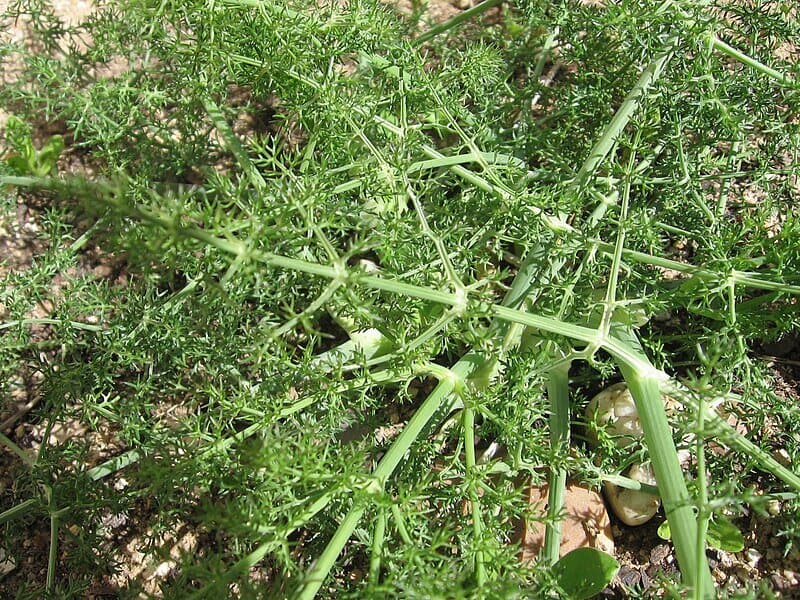
Sweet fennel has been used since Antiquity -- Roman gladiators ate it before fights to gain strength and courage. Hippocrates prescribed it to wet nurses to stimulate lactation, a use still present in herbal medicine. Its Latin name Foeniculum comes from 'foenum' (hay) because it grew in meadows. The Chinese have used it for 3000 years in traditional medicine for digestive disorders. Sweet fennel (var. dulce) is distinguished from bitter fennel (var. amara) by its gentleness and lower toxicity.
Sweet fennel contains 70-80% trans-anethole, a molecule with powerful estrogen-like properties. This is why it is traditionally used to stimulate lactation and regulate female cycles. But this same property makes it strictly prohibited in cases of hormone-dependent cancer, in epileptics (anethole is pro-convulsant) and in children under 6 years.
Les propriétés listées reposent sur des études in vitro et/ou un usage traditionnel. Sauf mention contraire, elles n'ont pas été validées par des essais cliniques humains rigoureux. Ces informations ne constituent pas un avis médical.
Digestive
Facilite la digestion, réduit les ballonnements et les spasmes intestinaux.
Traditional use
Antispasmodic
Traditional use
Galactagogue
Traditional use
Sweet fennel is mainly used for digestive disorders (bloating, gas, slow digestion) in abdominal massage diluted to 5%. It is also a galactagogue (stimulates lactation) but use while breastfeeding requires medical advice. Its use is OCCASIONAL only -- no prolonged courses due to anethole.
Adapté à la diffusion atmosphérique. 3-5 gouttes, 15-20 min maximum par heure. Ne pas diffuser en continu.
Diluer dans une huile végétale avant application. Respecter les dosages recommandés selon la zone et le public.
Non recommandé par voie orale. Utiliser exclusivement par voie cutanée ou en diffusion.
Les huiles essentielles suivantes se combinent particuli\u00e8rement bien avec fenouil doux pour renforcer ou compl\u00e9ter ses effets :
It is traditionally used as a galactagogue (stimulates milk production). Trans-anethole has a structural analogy with estrogens. However, it is not recommended during breastfeeding without medical supervision due to the risk of anethole passing into the breast milk.
Sweet fennel (Foeniculum vulgare var. dulce) contains less fenchone (a neurotoxic ketone) than bitter fennel. It is gentler and better tolerated. For aromatherapy, sweet fennel is always preferred. Always check the variety on the bottle.
Yes, trans-anethole is an excellent antispasmodic and carminative. It reduces bloating, flatulence and intestinal cramps. 1 drop in honey after meals. For adults only and in short courses (hepatotoxic in the long term).
The information on OilsGuide.com is for informational purposes only and does not replace medical advice. Essential oils are active substances that may present risks. Consult a healthcare professional before any therapeutic use.