Chargement...

Cinnamomum verum (feuilles)
5-12€ / 10ml
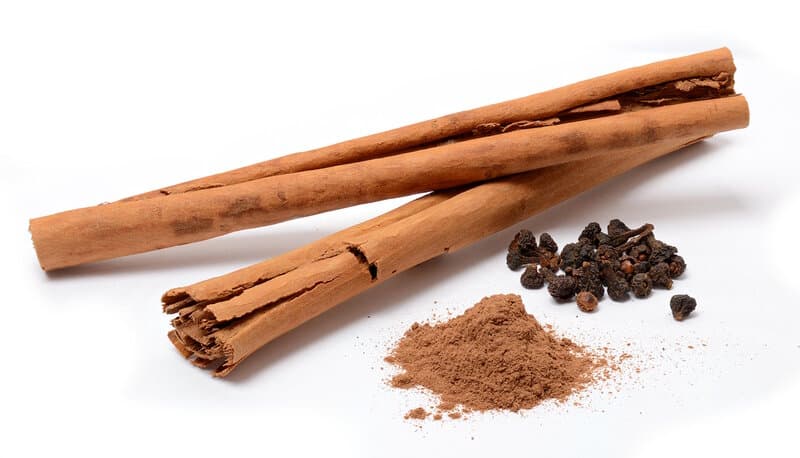
When you say 'cinnamon essential oil', you need to specify: bark or leaves? They are two VERY different essential oils. Cinnamon leaf (Cinnamomum verum, formerly C. zeylanicum) is distilled from the tree's leaves -- not the bark. In Sri Lanka, the largest global producer, cinnamon trees are trimmed like low hedges to facilitate leaf harvesting. Leaf essential oil is an abundant byproduct of the cinnamon industry, making it much more affordable than bark essential oil.
Cinnamon leaf contains 70-85% eugenol -- the same dominant molecule as clove. The bark, on the other hand, contains 65-80% cinnamaldehyde. Concretely: cinnamon leaf behaves like clove (anti-infectious, anesthetizing, skin-burning), not like the cinnamon you imagine. It is LESS irritating than cinnamon bark but remains skin-burning. It is an interesting alternative to clove, often cheaper.
Les propriétés listées reposent sur des études in vitro et/ou un usage traditionnel. Sauf mention contraire, elles n'ont pas été validées par des essais cliniques humains rigoureux. Ces informations ne constituent pas un avis médical.
Antibacterial
In vitro studies (PubMed)
Antifungal
In vitro studies
Analgesic
Traditional use
Antispasmodic
Traditional use
Cinnamon leaf is mainly used as an anti-infectious and local anesthetic. It is the alternative to clove for those who do not like its scent. SKIN-BURNING -- always dilute, mandatory skin test. As a gargle (diluted in water), it is effective for sore throat and oral infections. Less powerful than cinnamon bark as an anti-infectious, but gentler.
Non recommandé en diffusion. Privilégier l'application cutanée diluée ou l'inhalation contrôlée.
Diluer dans une huile végétale avant application. Respecter les dosages recommandés selon la zone et le public.
Non recommandé par voie orale. Utiliser exclusivement par voie cutanée ou en diffusion.
Les huiles essentielles suivantes se combinent particuli\u00e8rement bien avec cannelle feuilles pour renforcer ou compl\u00e9ter ses effets :
The bark contains cinnamaldehyde (very powerful anti-infectious, very irritating). The leaves contain eugenol (anti-infectious, milder, anesthetic). Leaf essential oil is gentler, less irritating and less expensive than bark. For family use, prefer the leaves.
Not identical but similar. Both contain high eugenol: 70-85% for cinnamon leaf, 75-88% for clove. They share the same properties (antibacterial, dental anesthetic) and the same precautions (dermocaustic, allergenic).
Eugenol has been used in dentistry since the 19th century as an anesthetic and antiseptic. Apply 1 drop on a cotton ball placed on the painful tooth for quick relief. This is emergency first aid, not treatment -- consult a dentist.
The information on OilsGuide.com is for informational purposes only and does not replace medical advice. Essential oils are active substances that may present risks. Consult a healthcare professional before any therapeutic use.