Chargement...

Cinnamomum cassia
5-12€ / 10ml
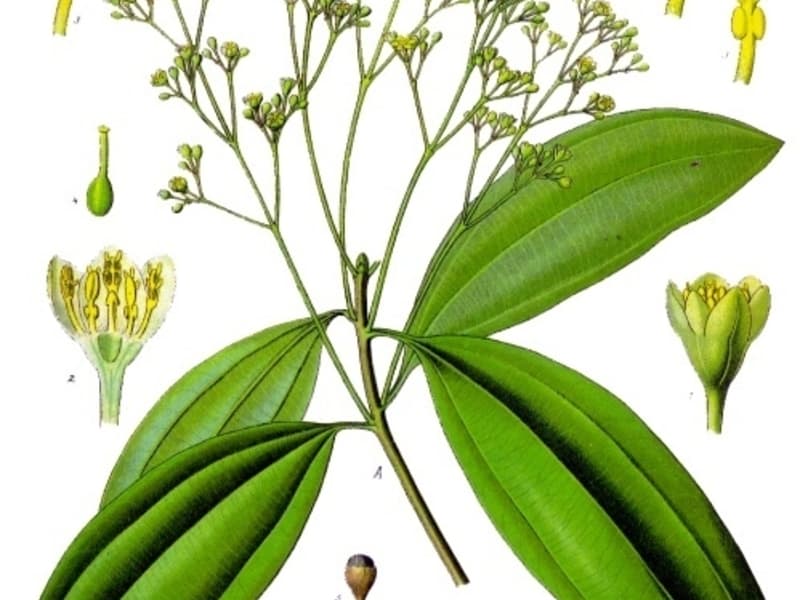
Cassia cinnamon is native to southern China, used for at least 4000 years in traditional Chinese medicine -- it is the gui zhi of the pharmacopoeia. Different from Ceylon cinnamon but the two have been confused throughout history. Arab merchants controlled its trade since Antiquity. Cassia represents over 90% of global cinnamon production.
Very high cinnamaldehyde content (80-95% vs 60-75% for Ceylon) and especially the presence of coumarin, which is hepatotoxic and absent from Ceylon. In aromatherapy, Ceylon is preferred for prolonged use. Cassia is more pungent and the most skin-burning of common essential oils.
Les propriétés listées reposent sur des études in vitro et/ou un usage traditionnel. Sauf mention contraire, elles n'ont pas été validées par des essais cliniques humains rigoureux. Ces informations ne constituent pas un avis médical.
Very powerful antibacterial
Traditional use
Antiviral
Traditional use
Antifungal
Traditional use
Very powerful, reserved for adults and occasional use. Among the strongest anti-infectious agents in the plant kingdom. Skin-burning: never neat on skin (except wart). In diffusion, max 5-10% of the blend. Oral route limited to a few days. Prefer Ceylon for regular use.
Non recommandé en diffusion. Privilégier l'application cutanée diluée ou l'inhalation contrôlée.
Diluer dans une huile végétale avant application. Respecter les dosages recommandés selon la zone et le public.
Non recommandé par voie orale. Utiliser exclusivement par voie cutanée ou en diffusion.
Les huiles essentielles suivantes se combinent particuli\u00e8rement bien avec cannelle de chine (cassia) pour renforcer ou compl\u00e9ter ses effets :
No. Cassia (Cinnamomum cassia, China) is cheaper, stronger in cinnamaldehyde but contains hepatotoxic coumarin. Ceylon (Cinnamomum verum, Sri Lanka) is finer, safer and virtually coumarin-free. For aromatherapy, always prefer Ceylon.
More than Ceylon, yes. Its high coumarin content is hepatotoxic in prolonged use. It is also very dermocaustic (even more than Ceylon). For internal use, Ceylon is always preferable. Cassia is mainly used in diffusion (small doses) and in food flavoring.
Same anti-infectious properties as Ceylon cinnamon (cinnamaldehyde) but with more risks. Mainly used in the food industry (flavor) and in diffusion blends at 1-2% maximum. In therapeutic aromatherapy, prefer Ceylon.
The information on OilsGuide.com is for informational purposes only and does not replace medical advice. Essential oils are active substances that may present risks. Consult a healthcare professional before any therapeutic use.