Chargement...

Thymus vulgaris ct. thymol
8-18€ / 10ml
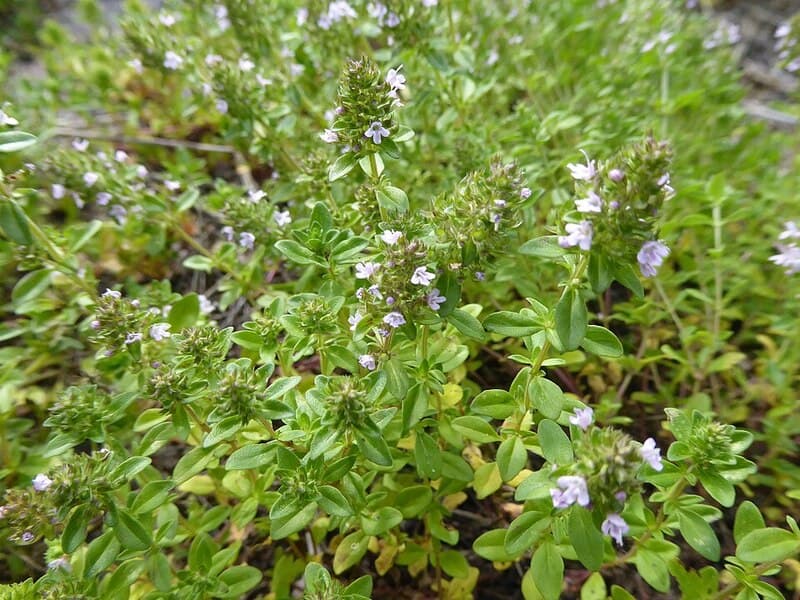
Thyme is one of the oldest aromatic plants in the pharmacopoeia. Egyptians used it for embalming, Greeks burned it in temples (thymos = 'to fumigate' in Greek), Romans scented their baths with it. In the Middle Ages, ladies offered sprigs of thyme to knights departing for the Crusades. Thymol thyme is the most powerful chemotype of thymes -- a true natural antibiotic, but reserved for informed adults.
30 to 50% thymol, one of the most powerful phenols in the plant kingdom. Listerine (mouthwash) owes part of its effectiveness to thymol. This concentration explains both its anti-infectious effectiveness AND its skin-burning potential: applied neat, it burns the skin. NEVER neat, maximum 5% dilution.
Les propriétés listées reposent sur des études in vitro et/ou un usage traditionnel. Sauf mention contraire, elles n'ont pas été validées par des essais cliniques humains rigoureux. Ces informations ne constituent pas un avis médical.
Powerful antibacterial
Confirmed traditional use
Antifungal
Traditional use
Immune-boosting
Traditional use
Reserved for serious infections in adults. Never neat, never in diffusion (irritates mucous membranes), never in children. Skin application: max 5%. Oral route in capsules only under aromatherapist prescription, short courses of 5-7 days max (hepatotoxic at high doses).
Non recommandé en diffusion. Privilégier l'application cutanée diluée ou l'inhalation contrôlée.
Diluer dans une huile végétale avant application. Respecter les dosages recommandés selon la zone et le public.
Non recommandé par voie orale. Utiliser exclusivement par voie cutanée ou en diffusion.
Les huiles essentielles suivantes se combinent particuli\u00e8rement bien avec thym à thymol pour renforcer ou compl\u00e9ter ses effets :
It is a powerful essential oil that must be used with caution. Thymol is dermocaustic (burns undiluted skin), hepatotoxic at high doses, and contraindicated for children, pregnant women and people with liver problems. Always dilute to a maximum of 5%.
It is one of the most powerful anti-infectious agents in the plant kingdom. Thymol and carvacrol are effective against a broad spectrum of bacteria, including some that are antibiotic-resistant. It is used in short courses for severe infections, under professional guidance.
Thymol thyme is the most powerful but also the most aggressive -- reserved for adults in short courses. Linalool thyme is much gentler, usable from age 6, and suitable for everyday minor infections. For family use, prefer linalool.
The information on OilsGuide.com is for informational purposes only and does not replace medical advice. Essential oils are active substances that may present risks. Consult a healthcare professional before any therapeutic use.