Chargement...

Salvia officinalis
8-18€ / 10ml
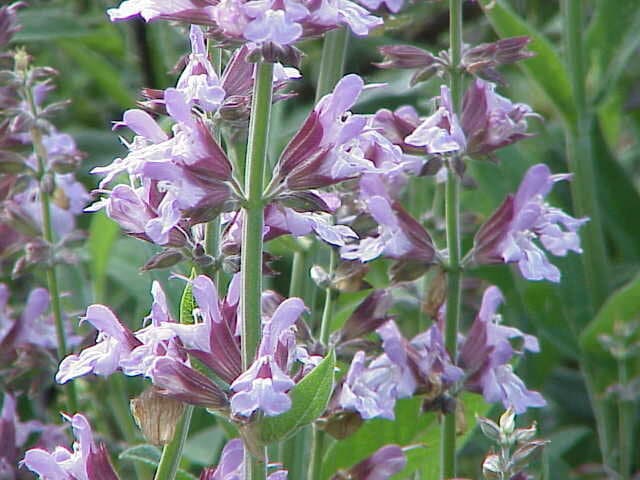
Caution -- this is not one to take lightly. Common sage is the 'grande sauge' of herbalists -- NOT to be confused with clary sage, which is much gentler. Its Latin name Salvia comes from 'salvare' (to save), and a Provencal proverb says: 'Who has sage in his garden needs no doctor.' Romans considered it sacred and harvested it barefoot, in a white tunic, after a sacrifice. In the Middle Ages, it was the universal remedy of monasteries. But in modern aromatherapy, we know that the thujone it contains is neurotoxic -- making it an essential oil reserved for specialists.
Common sage contains 20-40% thujone (alpha and beta), a neurotoxic ketone capable of causing epileptiform convulsions at high doses. This is THE major difference with clary sage (which contains no thujone). Common sage has a powerful estrogen-like action -- traditionally used for menopause and hormonal disorders. But the same properties make it dangerous in cases of hormone-dependent cancer. It is a specialist essential oil, not for everyday use.
Les propriétés listées reposent sur des études in vitro et/ou un usage traditionnel. Sauf mention contraire, elles n'ont pas été validées par des essais cliniques humains rigoureux. Ces informations ne constituent pas un avis médical.
Antibacterial
In vitro studies (PubMed)
Antispasmodic
Traditional use
Mucolytic
Traditional use
Tonic
Traditional use
Common sage is RESERVED for informed adults, for specific indications and short courses (10 days max). Never in children, pregnant women, epileptics or people with hormone-dependent cancer. Never in diffusion (neurotoxic by prolonged inhalation). For daily menopausal problems, prefer clary sage -- it is effective AND safe.
Non recommandé en diffusion. Privilégier l'application cutanée diluée ou l'inhalation contrôlée.
Diluer dans une huile végétale avant application. Respecter les dosages recommandés selon la zone et le public.
Non recommandé par voie orale. Utiliser exclusivement par voie cutanée ou en diffusion.
Les huiles essentielles suivantes se combinent particuli\u00e8rement bien avec sauge officinale pour renforcer ou compl\u00e9ter ses effets :
Yes, it is one of the most dangerous essential oils. Alpha-thujone and beta-thujone are neurotoxic (seizures) and abortifacient. Strictly reserved for informed professionals. NEVER use without specialized guidance. Prefer clary sage for safe use.
Because in expert hands, in precise doses and for very specific indications (hormonal menopause, excessive sweating), it can be useful. But the risk/benefit ratio makes it unsuitable for home use. Clary sage covers most indications safely.
Common sage = thujone (neurotoxic, dangerous). Clary sage = sclareol (no thujone, safe). NEVER confuse the two. Clary sage is the one for aromatherapy at home. Common sage is for professionals only.
The information on OilsGuide.com is for informational purposes only and does not replace medical advice. Essential oils are active substances that may present risks. Consult a healthcare professional before any therapeutic use.