Chargement...

Cinnamosma fragrans
6-12€ / 10ml
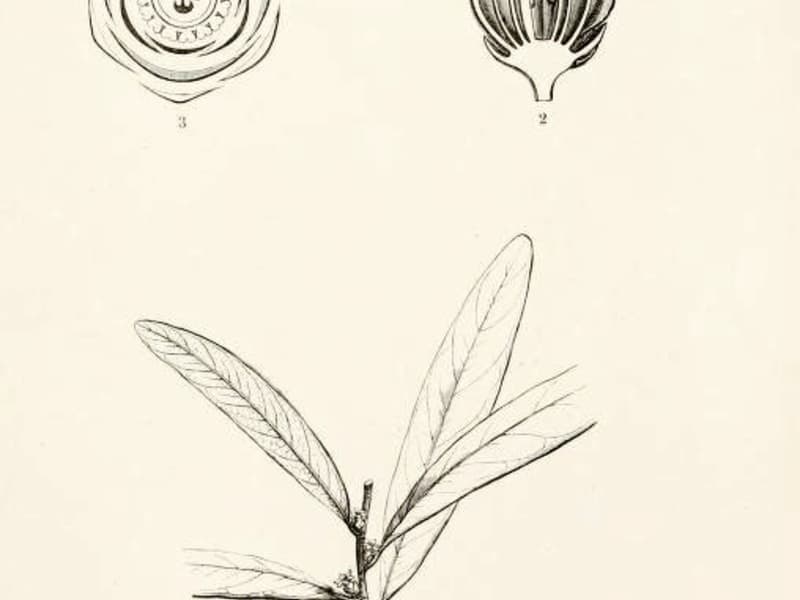
Saro (Cinnamosma fragrans) is a tree endemic to Madagascar, where it is called 'mandravasarotra' -- literally meaning 'that keeps illness away' in Malagasy. This tells how important it is in traditional Malagasy medicine. The tree grows in the dry forests of western Madagascar. Its essential oil was studied and popularized by French-speaking aromatherapists in the 2000s as an alternative to ravintsara.
Saro has a remarkably complete biochemical profile: 1,8-cineole (expectorant), linalool (calming), sabinene and pinenes (immunostimulant). This versatility earns it the nickname 'Malagasy multi-use'. Unlike ravintsara (which is an Asian camphor tree adapted to Madagascar), saro is a true Malagasy endemic -- 100% made in Madagascar.
Les propriétés listées reposent sur des études in vitro et/ou un usage traditionnel. Sauf mention contraire, elles n'ont pas été validées par des essais cliniques humains rigoureux. Ces informations ne constituent pas un avis médical.
Antiviral
Traditional use
Antibacterial
Traditional use
Expectorant
Traditional use
Immune-boosting
Traditional use
Saro is a broad-spectrum anti-infectious, usable much like ravintsara. It is applied in chest massage diluted to 10-15% for respiratory infections, rubbed on the wrists for prevention, or locally on herpes blisters. Well tolerated, it suits children from 3 years old (diluted). In diffusion, it effectively purifies the air.
Adapté à la diffusion atmosphérique. 3-5 gouttes, 15-20 min maximum par heure. Ne pas diffuser en continu.
Diluer dans une huile végétale avant application. Respecter les dosages recommandés selon la zone et le public.
Non recommandé par voie orale. Utiliser exclusivement par voie cutanée ou en diffusion.
Les huiles essentielles suivantes se combinent particuli\u00e8rement bien avec saro pour renforcer ou compl\u00e9ter ses effets :
Saro (Cinnamosma fragrans) is a shrub endemic to Madagascar. Its Malagasy name means 'that which overcomes all ills'. Its essential oil is a well-tolerated anti-infectious agent, often compared to ravintsara. It is the great Malagasy discovery of the 2000s in aromatherapy.
Yes, largely. Its profile (1,8-cineole + linalool) makes it an excellent alternative to ravintsara for winter infections. Some aromatherapists even prefer it for its better tolerance. Similar price range.
Yes, it is well tolerated from age 3 (diluted). Its balanced profile (cineole + linalool) combines the expectorant power of cineole with the gentleness of linalool. In chest rub at 5-10% for childhood colds.
The information on OilsGuide.com is for informational purposes only and does not replace medical advice. Essential oils are active substances that may present risks. Consult a healthcare professional before any therapeutic use.