Chargement...

Mentha arvensis
4-8€ / 10ml
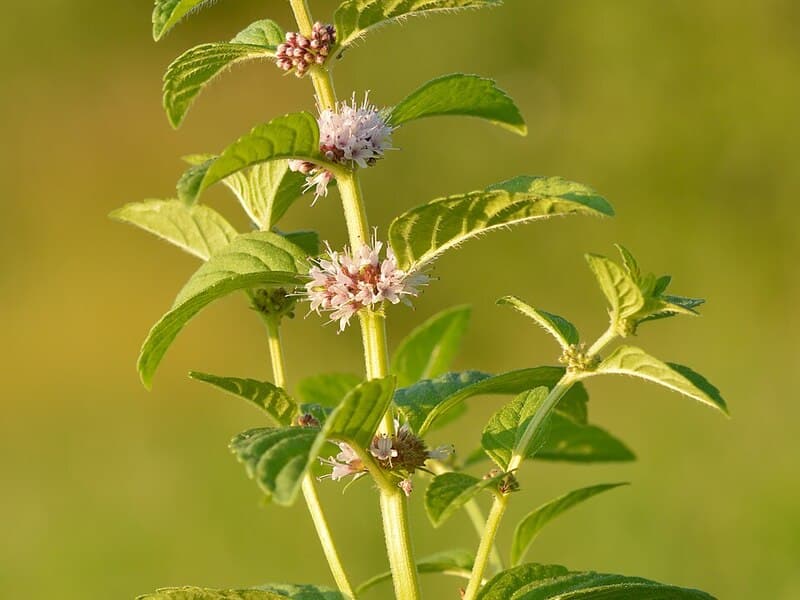
Cornmint (Mentha arvensis) is mainly cultivated in India and China as an industrial source of natural menthol. Unlike European peppermint, it is the richest in menthol of all mints -- up to 90% after crystallization. In India, it has been cultivated on a large scale in Uttar Pradesh since the 1960s.
Much higher menthol content than peppermint (70-90% vs 30-45%) and almost complete absence of menthone. A rawer product, more cooling but also more irritating. Mainly used for the extraction of crystallized menthol. The whole essential oil is less common in aromatherapy.
Les propriétés listées reposent sur des études in vitro et/ou un usage traditionnel. Sauf mention contraire, elles n'ont pas été validées par des essais cliniques humains rigoureux. Ces informations ne constituent pas un avis médical.
Powerful analgesic (cooling effect)
Traditional use
Anti-migraine
Traditional use
Digestive
Facilite la digestion, réduit les ballonnements et les spasmes intestinaux.
Traditional use
Reserved for experienced users seeking a more powerful cold effect than peppermint. Excellent in sports preparations. More irritating, prohibited in children under 12, pregnant women, epileptics. Always dilute heavily (5% max). Good value for money.
Adapté à la diffusion atmosphérique. 3-5 gouttes, 15-20 min maximum par heure. Ne pas diffuser en continu.
Diluer dans une huile végétale avant application. Respecter les dosages recommandés selon la zone et le public.
Non recommandé par voie orale. Utiliser exclusivement par voie cutanée ou en diffusion.
Les huiles essentielles suivantes se combinent particuli\u00e8rement bien avec menthe des champs pour renforcer ou compl\u00e9ter ses effets :
Cornmint (Mentha arvensis) contains even more menthol (70-90%) than peppermint (30-55%). It is often used to produce natural menthol crystals. Same cooling effect but stronger. Same precautions: forbidden before age 6, not for epileptics.
For cooling and analgesic uses (headaches, muscle pain), yes. For digestion, peppermint is preferred for its more balanced profile. Cornmint is often cheaper as it is produced in larger quantities (India, China).
Yes, the majority of natural menthol comes from cornmint (de-mentholized or crystallized). Tiger balm, muscle creams, cooling gels -- many use cornmint-derived menthol. The essential oil itself is less used in fine aromatherapy.
The information on OilsGuide.com is for informational purposes only and does not replace medical advice. Essential oils are active substances that may present risks. Consult a healthcare professional before any therapeutic use.