Chargement...

Leptospermum scoparium
20-50€ / 10ml
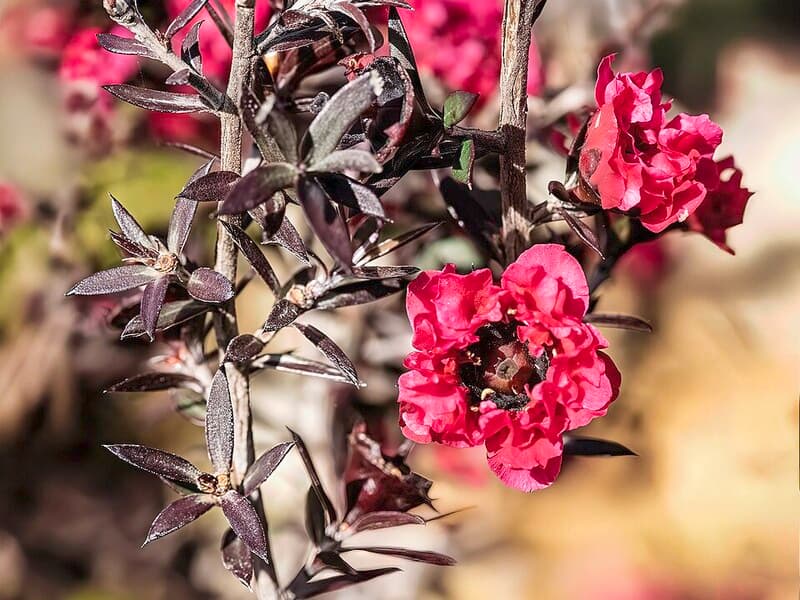
Manuka (Leptospermum scoparium) is a shrub from New Zealand, sacred to the Maori who have used it for centuries in traditional medicine. It is best known for manuka honey, whose exceptional antibacterial properties are due to methylglyoxal (MGO). Manuka essential oil is less famous than the honey but has its own therapeutic profile, different from the honey. The Maori called it 'kahikatoa' and used its leaves in poultices on infected wounds.
Manuka essential oil contains beta-triketones (leptospermone, isoleptospermone, flavesone), molecules absent from tea tree and unique in the plant kingdom. These triketones give it an antibacterial activity 20 to 30 times greater than tea tree against certain strains of Staphylococcus aureus, including MRSA (methicillin-resistant Staphylococcus). It is a 'super tea tree' for resistant skin infections.
Les propriétés listées reposent sur des études in vitro et/ou un usage traditionnel. Sauf mention contraire, elles n'ont pas été validées par des essais cliniques humains rigoureux. Ces informations ne constituent pas un avis médical.
Powerful antibacterial
Traditional use
Antifungal
Traditional use
Healing
Traditional use
Manuka is mainly used for resistant skin infections -- when tea tree is not enough. In local application diluted to 5-10%, it is more powerful than most antibacterial essential oils. Its high price (20-50 EUR/10ml) reserves it for difficult cases. For common infections, tea tree remains the first choice.
Adapté à la diffusion atmosphérique. 3-5 gouttes, 15-20 min maximum par heure. Ne pas diffuser en continu.
Diluer dans une huile végétale avant application. Respecter les dosages recommandés selon la zone et le public.
Non recommandé par voie orale. Utiliser exclusivement par voie cutanée ou en diffusion.
Les huiles essentielles suivantes se combinent particuli\u00e8rement bien avec manuka pour renforcer ou compl\u00e9ter ses effets :
Yes. Manuka (Leptospermum scoparium) is a New Zealand plant, while tea tree (Melaleuca alternifolia) is Australian. Manuka is richer in triketones (leptospermone, flavesone), making it a superior anti-staphylococcal agent. It is more expensive and more specifically active.
Same plant, but the essential oil and honey have different active compounds. Manuka honey is rich in methylglyoxal (MGO), absent from the essential oil. Both are antibacterial but through different mechanisms. They complement each other rather than being substitutable.
Excellent, especially against MRSA (methicillin-resistant Staphylococcus aureus). Applied diluted to 5-10%, it helps heal wounds, ulcers and infected dermatoses. It is one of the most studied essential oils against antibiotic-resistant bacteria.
The information on OilsGuide.com is for informational purposes only and does not replace medical advice. Essential oils are active substances that may present risks. Consult a healthcare professional before any therapeutic use.