Chargement...

Hyssopus officinalis var. decumbens
12-25€ / 10ml
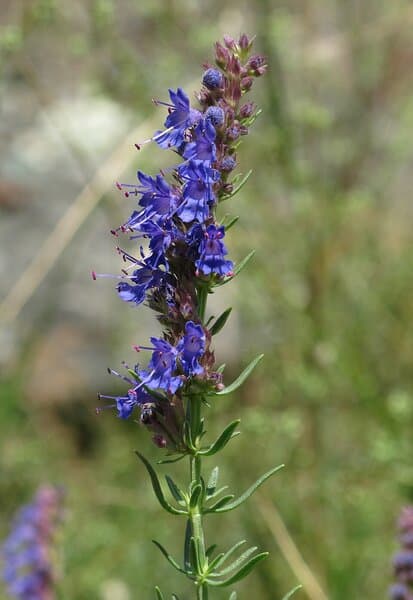
Hyssop decumbens (Hyssopus officinalis var. decumbens) is the safe hyssop -- a gentle subspecies that grows at altitude in the Pyrenees and mountains of southern France. Unlike its dangerous cousin hyssop officinalis (rich in pinocamphone), the decumbens variety is rich in 1,8-cineole, which makes it a safe respiratory essential oil. It was popularized by aromatherapists seeking the expectorant virtues of hyssop without the neurological risks.
Hyssop decumbens is the SAFE alternative to hyssop officinalis. It contains neither pinocamphone nor thujone -- only 1,8-cineole and linalool, molecules that are well tolerated. Its profile is closer to eucalyptus radiata than to its dangerous namesake. It is an excellent family respiratory oil.
Les propriétés listées reposent sur des études in vitro et/ou un usage traditionnel. Sauf mention contraire, elles n'ont pas été validées par des essais cliniques humains rigoureux. Ces informations ne constituent pas un avis médical.
Antiviral
Traditional use
Expectorant
Traditional use
Mucolytic
Traditional use
Hyssop decumbens is a safe respiratory essential oil, usable from 6 years (diluted). It can replace eucalyptus radiata with a slightly different olfactory profile. No neurotoxicity, no special precautions beyond those common to all essential oils.
Adapté à la diffusion atmosphérique. 3-5 gouttes, 15-20 min maximum par heure. Ne pas diffuser en continu.
Diluer dans une huile végétale avant application. Respecter les dosages recommandés selon la zone et le public.
Non recommandé par voie orale. Utiliser exclusivement par voie cutanée ou en diffusion.
Les huiles essentielles suivantes se combinent particuli\u00e8rement bien avec hysope couchée pour renforcer ou compl\u00e9ter ses effets :
Yes, unlike official hyssop (Hyssopus officinalis) which contains neurotoxic and abortifacient pinocamphone. Decumbent hyssop (var. decumbens) is rich in linalool and 1,8-cineole, much gentler and well tolerated. NEVER confuse the two.
Yes, it is a good expectorant and respiratory antiviral, similar to ravintsara. The 1,8-cineole clears the respiratory tract, linalool provides a calming effect. In diluted chest rub for bronchitis and sinusitis.
It grows in the Pyrenees and northern Spain, at altitude. It is a sub-variety of official hyssop that has developed a different chemotype (linalool instead of pinocamphone) due to the mountain terroir. Limited production hence higher price.
The information on OilsGuide.com is for informational purposes only and does not replace medical advice. Essential oils are active substances that may present risks. Consult a healthcare professional before any therapeutic use.