Chargement...

Zingiber officinale
6-15€ / 10ml
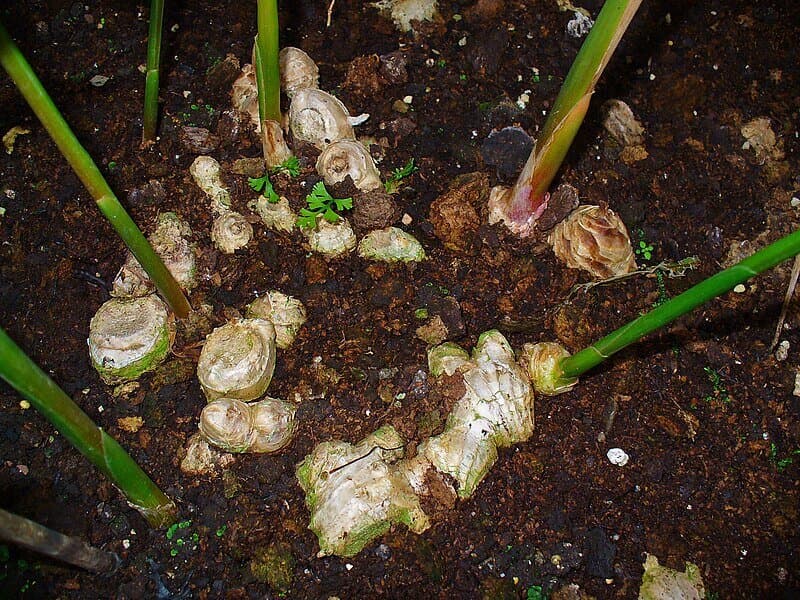
Ginger has been used in traditional Chinese and Ayurvedic medicine for over 5000 years. Confucius consumed it at every meal. Chinese and Greek sailors took it on sea voyages to combat seasickness -- a use still valid today. The English word 'ginger' comes from the Sanskrit 'sringavera' (horn-shaped, referring to the rhizome's shape). Marco Polo discovered the immense ginger plantations in China in the 13th century. It is now one of the most consumed spices in the world.
Ginger essential oil is dominated by zingiberene, a sesquiterpene that gives it its anti-nausea and digestive properties. Unlike fresh ginger (rich in gingerols), the essential oil loses some of the 'pungent/warming' effect during distillation. However, its anti-nausea action is preserved and this is the main use in aromatherapy.
Les propriétés listées reposent sur des études in vitro et/ou un usage traditionnel. Sauf mention contraire, elles n'ont pas été validées par des essais cliniques humains rigoureux. Ces informations ne constituent pas un avis médical.
Digestive tonic
Traditional use
Anti-nausea
Traditional use
Anti-inflammatory
Traditional use
Ginger essential oil is mainly used for digestive issues and nausea. Direct olfaction (inhaling the bottle or a tissue) is the most effective method against nausea. In abdominal massage diluted to 5%, it aids digestion. For joint pain, it combines well with anti-inflammatory essential oils (lemon eucalyptus, wintergreen). Its warm, spicy scent also makes it a popular ingredient in masculine perfumery.
Adapté à la diffusion atmosphérique. 3-5 gouttes, 15-20 min maximum par heure. Ne pas diffuser en continu.
Diluer dans une huile végétale avant application. Respecter les dosages recommandés selon la zone et le public.
Non recommandé par voie orale. Utiliser exclusivement par voie cutanée ou en diffusion.
Les huiles essentielles suivantes se combinent particuli\u00e8rement bien avec gingembre pour renforcer ou compl\u00e9ter ses effets :
This is one of its best scientifically documented indications. Ginger combats motion sickness, pregnancy nausea (by inhalation only) and postoperative nausea. Place 1 drop on a tissue and inhale as needed.
In diluted massage, ginger is warming and muscle-relaxing. Zingiberene and beta-sesquiphellandrene have anti-inflammatory properties. Ideal for muscle and joint pain and stiffness related to cold weather.
That is its traditional reputation in many cultures. Ginger essential oil is warming and stimulating, which may contribute to the effect. In lower abdomen massage or in diffusion, combined with ylang-ylang and sandalwood.
The information on OilsGuide.com is for informational purposes only and does not replace medical advice. Essential oils are active substances that may present risks. Consult a healthcare professional before any therapeutic use.