Chargement...

Copaifera officinalis
6-12€ / 10ml
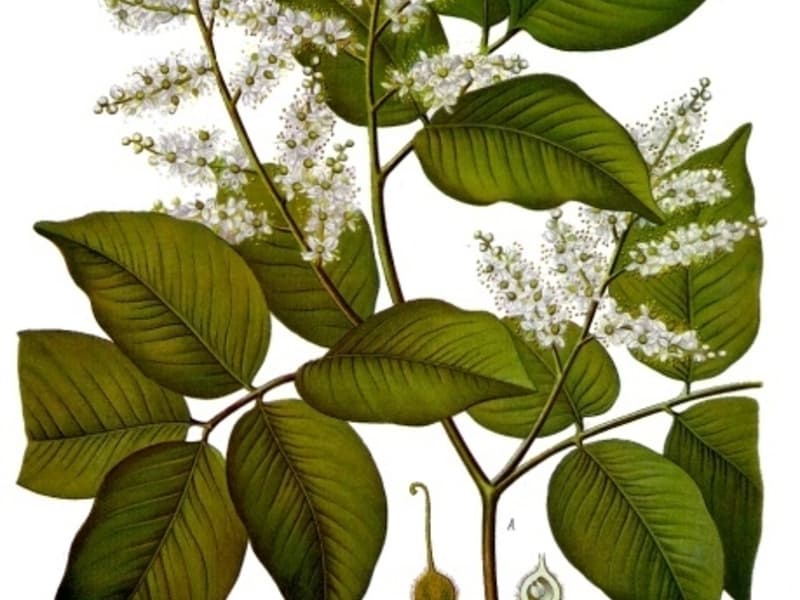
Copaiba (Copaifera officinalis) is a large tree of the Amazon rainforest. Indigenous peoples of Amazonia have used it for millennia -- they incise the trunk to harvest an oleoresin that flows naturally. This oleoresin was used by Jesuit missionaries in the 17th century to treat the wounds of the Indians. Copaiba is now one of the most studied natural anti-inflammatories.
Copaiba contains 50-80% beta-caryophyllene, a sesquiterpene that is also an agonist of the cannabinoid receptor CB2. It is one of the rare natural compounds to interact with the endocannabinoid system. This property could explain its powerful anti-inflammatory and analgesic effect.
Les propriétés listées reposent sur des études in vitro et/ou un usage traditionnel. Sauf mention contraire, elles n'ont pas été validées par des essais cliniques humains rigoureux. Ces informations ne constituent pas un avis médical.
Powerful anti-inflammatory
Traditional use
Analgesic
Traditional use
Healing
Traditional use
Copaiba is used in massage diluted to 10-20% for chronic inflammation and pain. Well tolerated, it is suitable for long courses. It is an interesting natural alternative for people seeking to reduce their consumption of synthetic anti-inflammatories (under medical supervision).
Adapté à la diffusion atmosphérique. 3-5 gouttes, 15-20 min maximum par heure. Ne pas diffuser en continu.
Diluer dans une huile végétale avant application. Respecter les dosages recommandés selon la zone et le public.
Non recommandé par voie orale. Utiliser exclusivement par voie cutanée ou en diffusion.
Les huiles essentielles suivantes se combinent particuli\u00e8rement bien avec copaïba (copahu) pour renforcer ou compl\u00e9ter ses effets :
Copaiba (Copaifera officinalis) is one of the most powerful natural anti-inflammatories. Beta-caryophyllene (40-60%) acts on CB2 cannabinoid receptors, similar to CBD. In massage diluted to 10-20%, it is remarkably effective for joint and muscle pain.
In Brazil, copaiba oleoresin has been used orally for centuries (traditional Amazon medicine). The essential oil can be taken orally in short courses for urinary tract inflammation or digestive issues. 1-2 drops in honey, under professional guidance.
Not botanically, but biochemically there is a link: beta-caryophyllene activates the same CB2 receptors as CBD. This explains the similar anti-inflammatory and analgesic effects. Copaiba is a legal plant alternative with a similar mechanism.
The information on OilsGuide.com is for informational purposes only and does not replace medical advice. Essential oils are active substances that may present risks. Consult a healthcare professional before any therapeutic use.